Policy intervention figure Energy demand: Difference between revisions
Jump to navigation
Jump to search
No edit summary |
Oostenrijr (talk | contribs) m (Oostenrijr moved page Policy intervention figureEnergy demand to Policy intervention figure Energy demand without leaving a redirect) |
||
| (3 intermediate revisions by 2 users not shown) | |||
| Line 1: | Line 1: | ||
{{FigureTemplate | {{FigureTemplate | ||
|Figure=024x img13.PNG | |Figure=024x img13.PNG | ||
|AltText= | |AltText=Global primary energy use under baseline and policy scenarios | ||
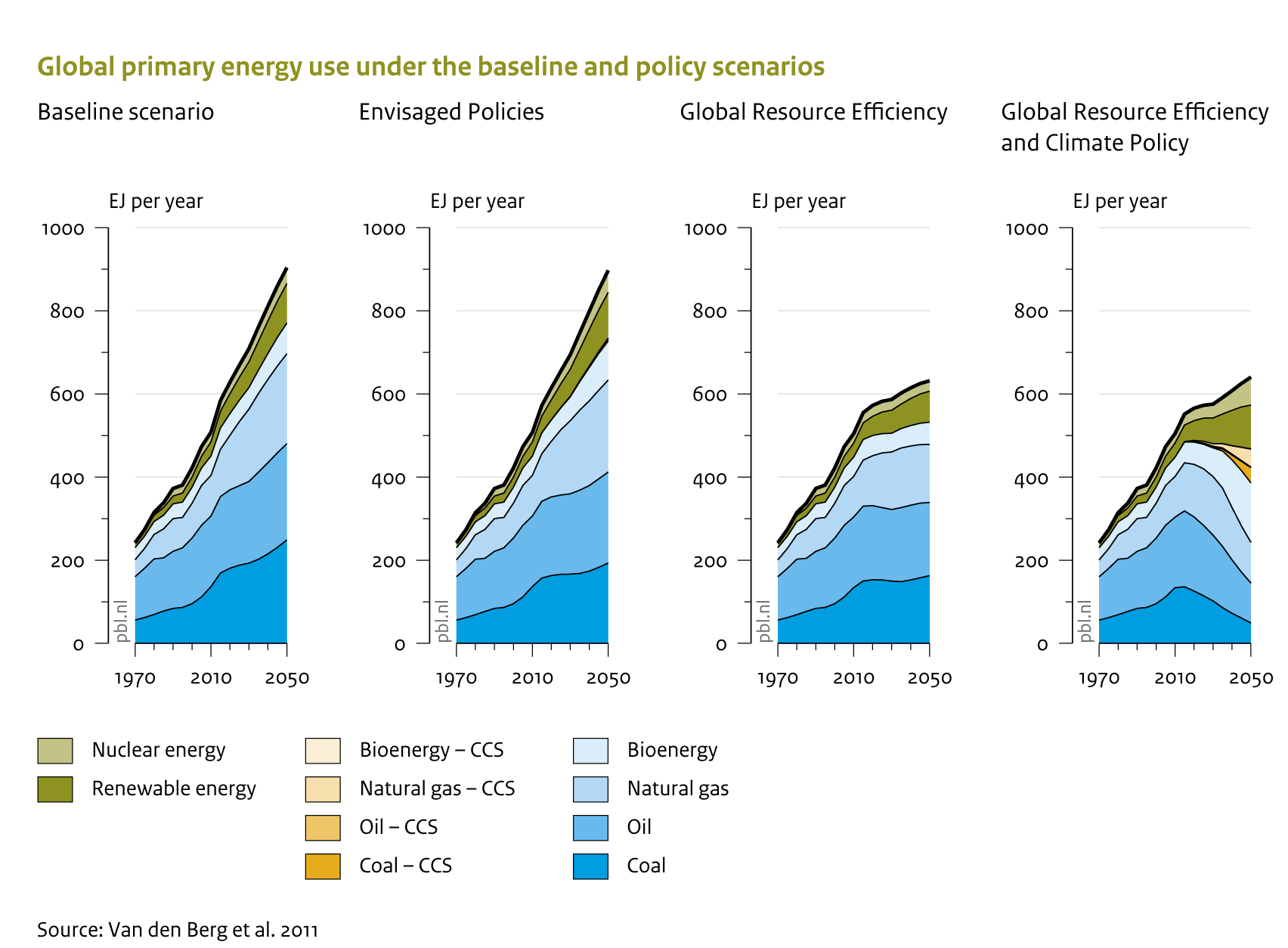
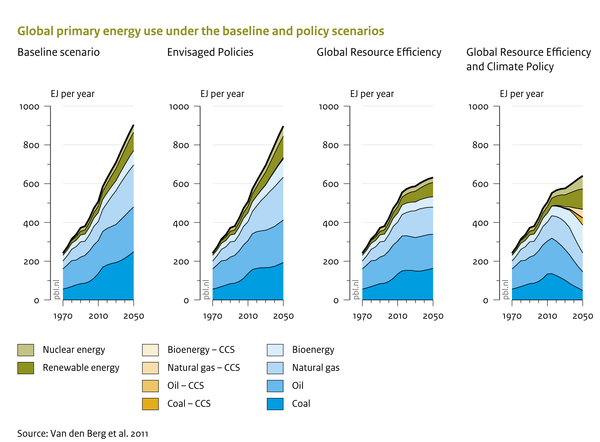
|Caption= | |Caption=The ‘envisaged policies’ scenario includes currently planned policies, the ‘global resource efficiency’ scenario assumes ambitious energy efficiency policies, and the ‘global resource efficiency and climate policy’ scenario additionally assumes policies to meet the 2 °C target. Total primary energy use could be significantly reduced by policies on energy efficiency, whereas additional climate policy would mostly affect the type of resources used. (Van den Berg et al., 2011b) | ||
|FigureType=Policy intervention figure | |FigureType=Policy intervention figure | ||
|OptimalSize=600 | |OptimalSize=600 | ||
|Component=Energy demand; | |Component=Energy demand; | ||
}} | }} | ||
Latest revision as of 11:59, 30 June 2014
Caption: The ‘envisaged policies’ scenario includes currently planned policies, the ‘global resource efficiency’ scenario assumes ambitious energy efficiency policies, and the ‘global resource efficiency and climate policy’ scenario additionally assumes policies to meet the 2 °C target. Total primary energy use could be significantly reduced by policies on energy efficiency, whereas additional climate policy would mostly affect the type of resources used. (Van den Berg et al., 2011b)
Figure is used on page(s): Energy demand