Energy supply and demand: Difference between revisions
Jump to navigation
Jump to search
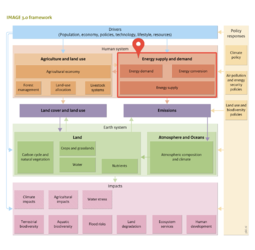
No edit summary |
No edit summary |
||
| Line 6: | Line 6: | ||
|KeyReference=Van Vuuren, 2007; De Vries et al., 2001 | |KeyReference=Van Vuuren, 2007; De Vries et al., 2001 | ||
|Reference=Criqui and Kouvaritakis, 2000 | |Reference=Criqui and Kouvaritakis, 2000 | ||
|InputVar=GDP per capita; Population per Region; Value added; Private consumption; Energy efficiency technology; Lifestyle parameters; Energy resources | |||
|FrameworkElementType=model component | |FrameworkElementType=model component | ||
|Description=Energy forms a central component in discussions on sustainable development. | |Description=Energy forms a central component in discussions on sustainable development. | ||
Revision as of 16:39, 7 August 2013
Parts of Energy supply and demand
- Introduction page
- Overview of references Additional info
- Technical learning
| Component is implemented in: |
|
| Projects/Applications |
| Models/Databases |
| Key publications |
| References |
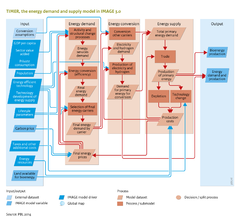

Key policy issues
- How can energy supply and demand become more sustainable, balancing human development, security of supply, and concerns about climate change and air pollution?
- What transitions in the energy system would meet long-term climate goals?
- How are these strategies affected by uncertainties in the energy system?
Introduction
"model component" is not in the list (driver component, pressure component, interaction component, state component, impact component, response component) of allowed values for the "FrameworkElementType" property.
Components
These components are part of the Energy supply and demand maincomponent: